about us
News Center
Your current location:Home - About us - News center
In a spring contact,
electricity does not pass through the entire metal surface at once. It passes
through small real contact areas where the mating surfaces touch. Those areas
depend on contact pressure. A highly conductive alloy can still produce
unstable resistance if the spring force drops, if the surfaces micro-move, or
if oxidation and wear change the interface. Published contact-degradation
research from NASA treats micro-motion and fretting as general mechanisms that
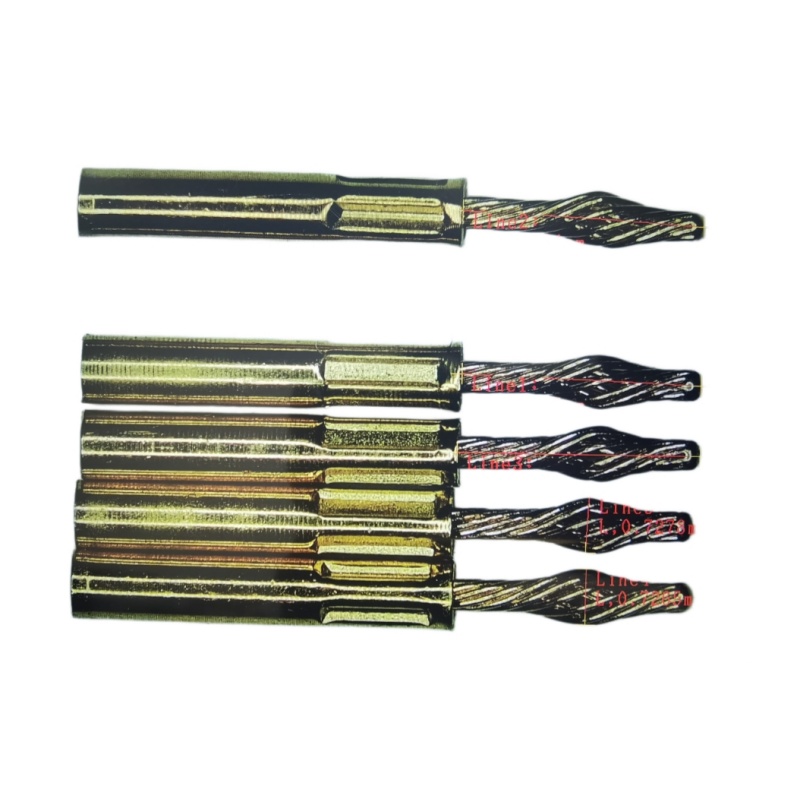
can disturb low-resistance paths over time. That is why a twist pin is not just
a piece of conductive wire. It is a small spring system that must keep pressure
alive under load. A design review for a twist pin contact should compare three
things together: spring force, conductivity, and fatigue resistance. Too little
spring force allows the contact to open or become noisy under vibration. Too
much force increases insertion effort and can wear through plating faster. A
material that holds force well at room temperature may relax more at high
temperature. A material that conducts extremely well may not have enough
strength to form fine elastic strands. C17200 beryllium copper sits in the
useful middle for many precision contacts. The product data for the Ximeconn
micro rectangular twist pin connector points to this balance through a ≤10mΩ
contact resistance target, 1A, 3A, and 5A current options, and a -65°C to
+125°C operating range. The lesson for contact development is simple: choose
the material by the job it must do, not by a single headline number. A twist
pin connector manufacturer and a rectangular connector supplier may both quote
conductivity, but the more useful question is how the contact maintains
pressure after thermal cycling, vibration, and repeated mating. If the spring
material relaxes, the interface changes. If the interface changes, resistance
rises. The spring material is therefore part of the electrical design, not just
a mechanical support.